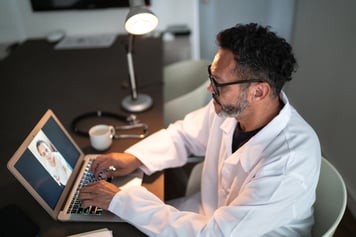
Lara Christy on Prevention, Personalized Care and Building Patient Trust
Virtual primary care can make healthcare easier to access. But for Lara Christy, ANP-BC, MSN, access is only part of what makes care work.
As a First Stop Health provider, Lara sees primary care as an opportunity to understand the whole person, catch health concerns earlier and help patients navigate what comes next. Sometimes that means managing a condition herself. Other times, it means bringing in a health coach, mental health provider or in-person specialist.
We sat down with Lara to talk about prevention, collaborative care and what it takes to build meaningful patient relationships virtually.
Why is preventive care such an important part of primary care?
Preventive care gives providers an opportunity to identify concerns before they become more serious.
“Preventative medicine is really vital for health maintenance, catching problems early when they're small and reversible,” Lara explains.
That can include staying current with recommended screenings or monitoring routine lab work for early signs of conditions such as prediabetes.
For Lara, primary care isn't only about responding when someone is sick. It's also about giving patients information and support that can help them make healthier choices earlier.

What does collaborative care look like in practice?
Health needs rarely exist in isolation.
Lara points to weight management as one example. While she can manage medication decisions, monitor side effects and check labs, other factors affecting a patient's progress may require different expertise.
“I also refer them to our coaches to assist with motivation and education about diet, nutrition and exercise,” she says.
Mental health providers can also become part of the care team when anxiety, depression or other concerns may be influencing a patient's health.
The result is a multidisciplinary approach designed to support the different factors that can shape long-term health.
How can virtual care make healthcare more accessible?
For many people, getting care isn't as simple as finding a provider. There are practical barriers in the way such as: time away from work, lost wages, costs, and geography.
Lara sees virtual care helping remove some of those obstacles by allowing patients to complete visits during a lunch hour or break without having to travel to an office.
She sees the impact particularly clearly in rural communities.
“Patients in rural areas can access the same high-quality care as those in major metropolitan areas,” Lara says.
Virtual care can also offer greater privacy for services such as mental health care and another path to preventive support for people who may otherwise put off getting care.
Can you really build trust with a provider virtually?
Lara believes you can. “With telehealth, we can develop the same rapport with patients as in person,” she says.
One advantage she sees is the ability for patients to learn about providers before choosing who they want to see. Different clinicians bring different backgrounds, interests and areas of experience to their work.
Lara, for example, has experience and an interest in wilderness medicine and cardiology. She recently connected with an ultrarunner who had specific questions about endurance sports and physiology.
“We all have different strengths, and patients can tailor their care based on our profiles.”
That ability to find the right fit can help make care feel more personal from the beginning.
What happens when a patient needs care that can't happen virtually?
Virtual care isn't meant to keep every health need virtual.
Lara says one misconception about telehealth is that the limitations of a virtual physical exam prevent providers from knowing when someone needs additional care. Her clinical experience helps her identify when an in-person evaluation or specialist is the appropriate next step.
She shared the example of a patient with severe new-onset hypertension. When it became clear that medication management alone wasn't enough, Lara referred the patient to cardiology and for additional testing.
But the patient's next step wasn't simply, “Go find a cardiologist.”
The First Stop Health referral team could help identify a nearby location, send records and support the process of getting the patient connected.
“The team really does that legwork to help the patient find the appropriate care,” Lara says.
It's an important distinction: virtual care can be the starting point without becoming an endpoint.
Why does feeling safe with a provider matter?
Trust can shape what a patient is willing to share.
Lara identifies herself as LGBTQ-friendly in her provider bio and says it has helped patients intentionally seek her out because they feel comfortable discussing all aspects of their health with her.
“I think that providing a safe space like that for patients is so vital.”
That choice can be especially meaningful for someone living in a community where finding a provider they feel comfortable with locally may be difficult.
When patients have more choice in who they see, virtual care can do more than expand geographic access. It can expand access to a provider they trust.
What has your experience as a First Stop Health provider been like?
The ability to build relationships over time is one of the things Lara enjoys most about primary care.
“I can see the same patients for follow-up and really develop a relationship with them over time.”
She also believes the experience of the clinician can ultimately affect the experience of the patient.
Working remotely has given Lara greater flexibility to care for her own health and family while continuing to maintain the standard of care she expects from herself.
Healthcare professionals often sacrifice their own well-being while caring for others, she says. Having a work environment that reduces that strain matters.
Patients can feel the difference, too.
Better Virtual Care Goes Beyond Access
Lara's perspective shows why access is an important measure of virtual care, but not the only one.
Can a patient find a provider they trust? Can their care team collaborate when their needs extend beyond primary care? Can someone help them navigate an in-person referral when necessary? Can they come back to the same provider and continue building a relationship? Those are the moments that turn access into care.
And they are what can make virtual primary care feel a lot more personal.
Meet the people behind the care and learn more about the First Stop Health care experience.
Meet Michele
She knows what works for her, and what doesn’t. That’s why personalized care made such a difference. With a care team that listened and built around her life, small changes became habits she could actually stick with.
See What's Possible